
How Cement Quality Determines Structural Reliability
17.02.2026
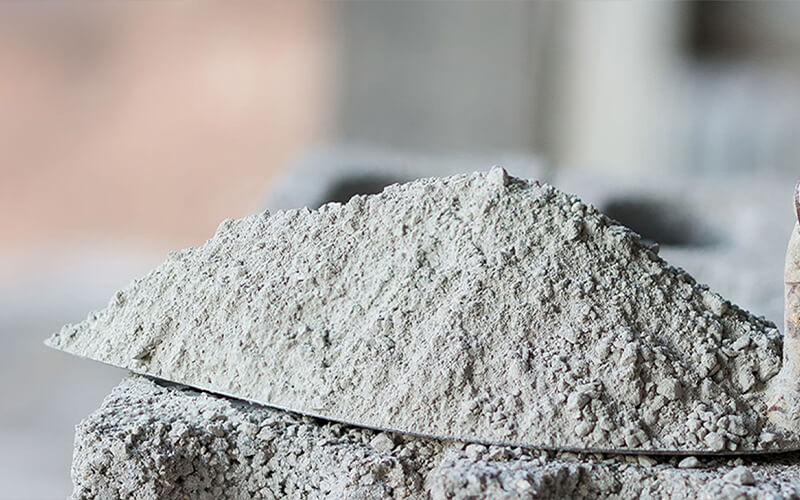
Introduction: Cement Quality as the Basis of Structural Dependability
Structural reliability refers to a building’s ability to perform safely and consistently throughout its intended lifespan under normal use and extreme conditions. While engineering design, construction methods, and maintenance practices all influence reliability, the performance of construction materials is fundamental. Among these materials, cement plays a central role because it governs concrete strength, durability, bonding behavior, and long-term stability. Variations in cement quality directly affect how structures respond to loads, environmental exposure, and aging, making cement quality a decisive factor in structural reliability.
1. Influence on Compressive Strength and Load Capacity
Compressive strength is the primary indicator of concrete’s ability to carry structural loads. High-quality cement hydrates uniformly, enabling concrete to reach and maintain its designed strength levels.
Poor-quality cement may result in uneven or insufficient strength, increasing the risk of overstressing and localized failure.
2. Consistency in Structural Performance
Reliable structures depend on uniform material behavior across all elements. Quality-controlled cement ensures consistent strength, stiffness, and bonding properties.
Inconsistent cement quality creates weak zones that disrupt load paths and reduce overall reliability.
3. Protection of Reinforcement Steel
Reinforced concrete relies on cement to create an alkaline and low-permeability environment that protects steel bars from corrosion. High-quality cement produces dense concrete with limited moisture penetration.
Inferior cement accelerates corrosion, leading to cracking, spalling, and loss of structural capacity.
4. Control of Cracking and Shrinkage
Cement quality influences shrinkage behavior, thermal response, and internal stress development. Well-formulated cement minimizes uncontrolled cracking.
Reduced cracking preserves structural continuity and prevents early deterioration.
5. Long-Term Strength Retention
Structural reliability depends on how well concrete maintains its properties over time. High-quality cement supports continuous hydration and microstructure refinement.
Low-quality cement may deteriorate prematurely, reducing long-term reliability.
6. Resistance to Environmental Degradation
Structures are exposed to moisture, chemicals, temperature changes, and pollutants. Quality cement improves resistance to sulfate attack, carbonation, and chloride penetration.
This environmental resistance helps preserve strength and stability over decades.
7. Performance Under Dynamic and Seismic Loads
Wind, traffic, and earthquakes impose dynamic stresses on buildings. Cement quality contributes to concrete toughness and controlled cracking behavior.
Reliable cement supports energy dissipation and prevents brittle failure.
8. Bond Strength With Reinforcement
Effective load transfer between steel and concrete depends on strong bonding. Cement quality determines paste density and adhesion to reinforcement.
Weak bonding reduces stiffness and increases deflection, compromising reliability.
9. Durability of Foundations and Substructure
Foundations must resist settlement, moisture, and chemical exposure. High-quality cement enhances foundation strength and impermeability.
Durable foundations provide a stable base for the entire structure.
10. Compatibility With Admixtures and SCMs
Modern concrete mixes often include chemical admixtures and supplementary cementitious materials. Quality cement ensures predictable interaction.
Incompatibility can cause setting problems and strength loss.
11. Reduction of Construction Defects
High-quality cement improves workability and setting behavior, reducing defects such as honeycombing, voids, and weak joints.
Fewer defects lead to more reliable structural systems.
12. Support for Quality Control and Testing
Consistent cement quality simplifies testing and monitoring processes. Predictable performance allows early detection of anomalies.
This strengthens overall quality assurance programs.
13. Compliance With Codes and Standards
Structural design codes assume the use of standard-compliant cement. Certified cement ensures legal and technical conformity.
Non-compliance increases safety and liability risks.
14. Extension of Service Life
Reliable cement quality extends the effective service life of buildings by minimizing deterioration.
Longer service life reduces maintenance needs and enhances safety.
Conclusion
Cement quality is a fundamental determinant of structural reliability. From strength development and crack control to corrosion resistance and environmental durability, every critical aspect of building performance is influenced by the cement used.
For engineers, contractors, and project owners, prioritizing high-quality, certified cement is a strategic investment in safety, resilience, and long-term value. Cement quality transforms design concepts into dependable structures that remain stable, functional, and secure throughout their lifespan.